






Ovarian drilling is a surgical intervention that is applicable to women with PCOS and who do not fit for any other medical interventions like diet alteration, medications, and therapies used for ovulation induction. PCOS is an endocrine disorder that affects most women of the reproductive years and is manifested by irregular menstrual cycle, elevated androgens, and enlarged ovaries//polycystic ovaries.
Specifically, the treatment of ovarian drilling is directed towards the formation of ovulation in women with PCOS. In this way, it assists in treating regular menstrual cycles and fertility.
- Laparoscope
- Trocars and Cannulas
- Electrocautery or Laser Equipment
- Insufflation Needle
- Graspers and Scissors
- Suction and Irrigation Devices
- Electrosurgical Generator
- Endoscopic Camera and Monitor
- Sterilization Equipment
Preoperative Preparation
Medical Evaluation:
Medical History: A detailed history should involve menstrual history, treatment history of PCOS, and other associated conditions.
Physical Examination: An annual gynecological examination should be carried out together with other general physical assessment.
Medication Review:
Current Medications: All the current medications of the patient is reviewed by the physician. Some drugs which interferes with the surgical process need to be stopped before the procedure.
Consent and Counseling:
Informed Consent: These are usually written consent related to the procedure advantages, risks, and outcomes as a confirmation, that they are willing to undertake the procedure or not.
Counseling: Counselling or psychological support may be provided, particularly if the patient has worries about becoming pregnant or the surgical procedure.
Laparoscopic ovarian drilling technique:
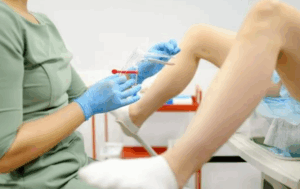
Preoperative assessment before ovarian drilling
Step 1: The assessment comprises the historical review, physical examination, and appropriate laboratory investigations, where necessary.
Step 2: General anesthesia is administered.
Step 3: A small incision is made near the naval, and a thin needle (Veress needle) is utilized to allow the entry of CO₂ to the abdominal cavity to have a pneumoperitoneum.
Step 4: A trocar is passed through the opening, and a laparoscope, a thin tube with a visioning screen, is used to view the pelvis’s organs.
Step 5: Further, additional small incisions are made in the lower abdomen to access and accommodate other surgical instruments, two or three more trocars are usually employed.
Step 6: The location of the ovaries is determined, and their size and cyst status are evaluated.
Step 7: A monopolar or bipolar electrocautery needle or a laser fiber for creating small punctures called ‘drills’ is made on the surface of the ovary; four to ten punctures are typically done per ovary.
Step 8: This protects a small part of the ovarian tissue and lowers androgen production, which can help restore regular ovulation.
Step 9: Specifically, the pelvic cavity is checked for bleeding and any other complication that may be in relation to the pregnancy state.
Step 10: As this is done, the instruments are withdrawn and the CO₂ is released from the abdomen.
Step 11: Surgical incisions that are as small as possible are stitched using materials such as sutures or surgical tapes.
Step 12: An aseptic technique is used, and sterile dressing is placed on the wound.
Step 13: Postoperative Care
Patients are often observed in the recovery room until they reach a fully conscious state again.
To minimize postoperative discomfort, and as a procedural necessity, pain control is administered, usually using analgesic agents.
To stop an infection, antibiotics may be used.
It also involves directions given to the patient on how to take care after the operation, in terms of postoperative restrictions and appointments with the doctor.
Hormone Levels:
Luteinizing Hormone (LH) and Follicle-Stimulating Hormone (FSH): To measure the level of LH/FSH which is an important parameter that is usually increased in PCOS.
Testosterone and Androstenedione: Some of the biochemical abnormalities that have been reported to be present in women with PCOS include high levels of these hormones.
Estrogen (Estradiol): In order to evaluate ovarian function at baseline.
Complete Blood Count (CBC): To assess general health and identify any possible problems, such as infection or anaemia.
Pelvic Ultrasound: To visualise the position of the ovaries and check for the presence and size of cysts.
Infection: Like in any procedure there is always a likelihood of infection at the sites where incisions were made or even in the pelvic cavity.
Bleeding: Sometimes, abdominal bleeding can be experienced within the confines of the surgical operation or afterward, which may necessitate other treatments.
Adhesions: The healing process might bring on a formation of scar tissues (adhesions) that can result to slight pain in the pelvic region or even complications on fertility in future.
Damage to Ovarian Tissue: There’s a chance of ovarian tissue damage, which might lead to a smaller ovarian reserve. This may have an impact on the woman’s future fertility.
Ovarian Failure: The procedure has some risks, such as premature ovarian failure which tends to occur when a large amount of ovarian tissue is removed during the drilling.
LEARNING & CME
View All
Advanced
Cardiovascular
Life Support
Basic Life
Support

Pediatric
Advanced Life
Support

Neonatal
Resuscitation
Program

Annual Stroke
Center
Continuing
Education

Opioid and Pain
Management

National
Institutes of
Health Stroke
Scale

Basics of
Electrocardiography