






The transplantation of a kidney by utilizing ESRD patients as recipients is the treatment option of choice for persons experiencing ESRD. On the negative side, significantly fewer adults diagnosed with end stage renal disease are suddenly on the transplantation waiting list, since they have a high mortality rate while being on dialysis. Nevertheless, the improvement in the graft survival and the long-term function has made kidney transplantation a more cost-effective way of life for people who have been on dialysis for a long time.
There are 24,273 kidney transplants performed in the US in 2019, this number is very large. The First wave of the COVID-19 pandemic in 2020 was so severe that it impeded kidney transplantation badly. However, over the following time, the transplantation numbers were restored to usual rates. Unbelievably, in the year 2022, a new annual record was set with 42,887 organ transplants done in the United States.
Surgical Instruments
Microsurgical Instruments
Vascular Access Instruments
Organ Preservation Solution
Cold Storage Systems
Surgical Drapes and Sterile Supplies
Surgical Microscope
Vascular Monitoring Devices
Anesthesia and Monitoring Equipment
Imaging Equipment
Preoperative Evaluation: Preoperative evaluation of the patient by the physician is the first step in the kidney transplantation procedure.
Informed Consent: The patient meets for a preoperative consultation with his surgeon to get a clear idea about every aspect of kidney transplantation procedure such as the risk-benefit ratio and alternative modes of treatment.
Medication Management: The patient’s medications are reviewed; hence, the ones that can interfere with the surgery or anesthesia are identified.
Final Preoperative Assessment: Prior to the start of the surgery, the surgical team performs a check-up on the patient which ensures that the necessary preparations are in place, and the details of the surgery plan have been finalized.
Step 1: Pre-Transplant Evaluation
Blood Type and Tissue Matching: The donor’s blood type and tissue type are being used to identify the compatible donors.
Crossmatch Testing: One of the tests that is done to make sure the recipient and donor will match is a crossmatch test that looks for antibodies in the recipient that fight the donor’s tissue.
Psychosocial Evaluation: It’s important to study the psychological and social status to test the patient’s mental and psychological preparedness for transplantation and their social support systems.
Step 2: Finding a donor
Deceased Donor: If the recipients case allows only living donor kidney transplants, transplant waiting list check is performed. The duration of the waiting depends upon factors like blood type and organ availability.
Living Donor: During a living donor transplantation, a suitable living donor is found. It can be a part of their family, friend or a person who wish to help. Transplantation from a living donor makes an additional advantage owing to the reduced number of waiting as well as the better outcomes.
Step 3: Transplant Surgery
Recipient Surgery: The patient is ready for transplant on the actual day of the procedure. Instead of removing the impaired kidney, the donor kidney is placed somewhere else, usually in the lower abdomen.
Donor Surgery: For instance, if the kidney is from a donor who is still alive, that donor is the one that has his or her kidney-removed during a surgical procedure which later is placed in the recipient. This surgery, which has been rendered less invasive, is usually done laparoscopically.
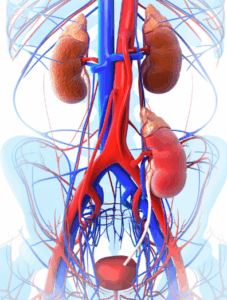
Kidney Transplantation
Step 4: Post-Transplant Care
Monitoring: Following the transplant, the recipient as well as the donor needs close follow-up in the hospital to check for post-operative complications and successful functioning of the new kidney.
Follow-Up Care: The dialysis patient will have to attend a follow-up checks by the nephrologist’s team monitoring kidney function, adjusting the dosage of medications and supervising the prophylaxis of any complications that may occur.
Step 5: Recovery and maintenance
Lifestyle Changes: The patient will have to adapt certain habits of adhering to the diet, taking drugs, and staying healthy, as they are prescribed.
Long-Term Care: Following a kidney transplantation, kidney recipients must have lifelong medical attention such as frequent assessments, kidney function monitoring, and adjustment of medications when necessary.
The Gibson entry is the incision that is most used; it is the one that’s made in the lower quadrant of the abdomen curvature. To reach the bladder and iliac vessels, retroperitoneal dissection and muscle division are required.
A midline incision may be employed, particularly when the recipients have had previous grafts in both the lower quadrants or when a large kidney must be transplanted into a small recipient.
The advanced strategies for the later be technique involves direct end-to-side anastomosis of the renal artery to external iliac artery. The iliac artery abdominalis can be utilized as well.
The right-side technique provides access through the aorta and inferior vena cava.
Anastomoses are selected with suture size (most commonly 5-0, 6-0, or 7-0 based on surgical situation).
There are different surgical approaches available among them a style of ligating a specific number of veins (patch technique) but also the utilization of vascular autograft and allograft and the recipient of chosen hypogastric or epigastric artery.
In kidney transplantation, the ureter is attached to the bladder via a method called ureteroneocystostomy. This can be achieved through two common methods:
Leadbetter-Politano Approach: It is forming a tunnel in submucosa of bladder and moving a ureter through it a passage is opened for the connection.
Lich Approach: In this procedure, the lower end of the renal pelvis of the affected kidney is anastomosed with the mucosa of the inner side of the bladder. The bladder muscularis is partly used to cover this connection.
Even in particular surgical cases, this is a condition when it is not possible to use a donor’s ureter for attachment to the recipient’s bladder. This can occur for various reasons:
Devascularized Donor Ureter: If the donor’s ureter is not able to receive blood properly during the recovery process and must be shortened to a point where it cannot reach the bladder, other options are needed.
Limited Bladder Mobility: Occasionally this might present a problem when capability of retrograde mobilization of the patient’s bladder fails to produce a junction of the ureter with the internal wall of has not been successful thus far in achieving that junction.
The strategy of this technique is firstly to anastomose the donor uterus directly to the male receiver’s ureter, bypassing his bladder.
Delayed Graft Function: This situation is characterized by the fact that dialysis is required within the first week after the transplant, it is more frequent with the deceased donor grafts because of the prolonged cold ischemia times. It exacerbates the number of hospitalized patients.
Vascular Issues: These include problems like renal artery thrombosis and stenosis in 1-10% of cases where their high blood pressure occurs. Doppler ultrasonography that can be used to make a diagnosis. In certain cases, percutaneous procedures can serve as non-surgical adjuncts, namely angioplasty and stent placement.
Ureteral Obstruction: The challenge of stenosis (ureter blockage) early or late post-intervention is one of the major problems during a transplantation. It can be caused by many different reasons including the clotting, the swelling, and the technical issues during the ureteroneocystostomy. Intervention may need a stent deployment with surgical revision or balloon dilatation for strictures.
Lymphocele: This is resulted from lymph leakage that is characterized by channelling of lymphatic fluid into lumps. It leads to swelling, pain, and renal function problems. On these, the physician may use ultrasonography or CT for diagnosis. There are three different treatments penetrative aspiration, sclerotherapy, and partial mesh drainage under laparoscopy.
LEARNING & CME
View All
Advanced
Cardiovascular
Life Support
Basic Life
Support
Pediatric
Advanced Life
Support

Neonatal
Resuscitation
Program

Annual Stroke
Center
Continuing
Education

Opioid and Pain
Management

National
Institutes of
Health Stroke
Scale

Basics of
Electrocardiography