






Intestinal transplantation was first performed by Alexis carrel in early twentieth century experienced initial problems of organ rejection, which was sorted out with help of immunosuppressive therapies like tacrolimus. Interest in the disease re-emerged in the 1960s but reduced due to the lack of effective treatments. It was not until the year 2000 that Medicare approved coverage for intestinal transplants, which paved way to acknowledging the said procedure in managing complications arising from TPN. Despite reaching its highest level in 2007, there was a downward trend in the number of transplants, down to 91 in 2020. Survival rates differ and are higher among children who have received transplants. More emphasis in recent years have been made towards enhancing management and outcomes of patients with IF through rehabilitation and other therapies such as teduglutide limiting the need for transplants.
Laparotomy sets
Hemostatic clips
Staplers and sutures
Vascular clamps
Anaesthesia machine
Ventilators
Perfusion machines
Enteral feeding pumps
Ultrasound machines
Biopsy needles
The following pre-transplant evaluation should be conducted:
HLA typing and blood cross-matching
Laboratory tests: Complete blood count, comprehensive metabolic panel, prealbumin levels and coagulation studies
Serologic testing: Cytomegalovirus (CMV), Epstein-Barr virus (EBV), Hepatitis A, B and C, AIDS (HIV).
Bowel function assessment: Assessment of bowel length and functionality by CT enterography
Vascular assessment: Evaluation of the intraabdominal venous and arterial system by duplex ultrasound. In some cases, splenoportography and mesenteric angiography may be required depending on the Miami classification of the patent ductus. Additional preoperative vein or arterial angioplasty may be needed depending on classification.
Donor liver biopsy: Done in certain situations; the recipient liver biopsy may also be required if parenteral nutrition has led to liver injury.
Infectious risk assessment: Dental and possibly an ENT consultation regarding in infectious sources such as dental infections which may require extractions.
Systemic disease evaluation: This involves patient-specific interventions such as coronary angiography, pulmonary function tests, and nutrition assessment to manage avoidable risks during surgery.
In intestinal and multivisceral transplantation patients should be positioned in a supine position where the head and the lower limbs are flat on the bed. Some positional changes like positioning the patient in a slight Trendelenburg position or a head down tilt may be employed to enhance both access and visualization of the organs. Occasionally the modified supine or the left lateral decubitus position might be used depending on the requirements of the surgery. Appropriate cushioning and support help prevent pressure ulcer formation and facilitate comfort.
Preparation:
- Deceased Donor: It is necessary to learn and determine the characteristic of the mesenteric arterial blood supply and venous blood flow.
- Living Donor: Divide about 150 cm of the ileum along with its vascular supply; then join the remaining ileum with an ileo-ileal anastomosis.
Donor Organ Preparation:
- Deceased Donor: Apply a cross-clamp to the aorta and rinse the organ with University of Wisconsin solution. Include the SMA with a segment of the aorta and ligate of splenic vein together with the SMV. If possible, it is advisable to free a segment of the ascending colon and the right and middle colic arteries.
- Living Donor: Resect the isolated ileal segment and anastomose the stumps of the remaining ileum.
Recipient Surgery:
- Deceased Donor: Carry out end-to-side anastomosis of the side of the donor small bowel to the proximal host duodenum or jejunum. Constitute the distal end with the native colon or ileocecal complex.
- Living Donor: Anastomose the donor vascular pedicle to that of the ileocolic vessels or the infrarenal aorta and the inferior vena cava if required.
Critical Steps:
- Deceased Donor: Reconstruct the arterial blood flow and re-anastomose the intra-renal aorta and the venous blood flow and re-anastomose the portal vein or infrarenal vena cava.
- Living Donor: Make sure that the length is sufficient for vitamin and bile absorption. The distal ileocecal complex must be preserved for the absorption of B12.
Postoperative Considerations:
- Deceased Donor: Perform an end chimney or Bishop-Koop ileostomy for routine postoperative graft surveillance.
Recipient Surgery:
- Deceased Donor: Carry out end-to-side anastomosis of the side of the donor small bowel to the proximal host duodenum or jejunum. Constitute the distal end with the native colon or ileocecal complex.
- Living Donor: Anastomose the donor vascular pedicle to that of the ileocolic vessels or the infrarenal aorta and the inferior vena cava if required.
Critical Steps:
- Deceased Donor: Reconstruct the arterial blood flow and re-anastomose the intra-renal aorta and the venous blood flow and re-anastomose the portal vein or infrarenal vena cava.
- Living Donor: Make sure that the length is sufficient for vitamin and bile absorption. The distal ileocecal complex must be preserved for the absorption of B12.
Postoperative Considerations:
- Deceased Donor: Perform an end chimney or Bishop-Koop ileostomy for routine postoperative graft surveillance
Combined Liver-Intestine Transplantation
Donor Organ Preparation: Harvest the liver and the bowel together which should be either in a combined spotlight or under one surgeon. Examine and debride crucial tissue on the back table.
Recipient Surgery:
- Hepatectomy: Perform host hepatectomy.
- Anastomoses: Develop arterial and venous end-to-side anastomoses to the host aorta and IVC correspondingly.
- Duodenum Reconstruction: Anastomose the donor jejunum to the host distal duodenum in a manner that is end-to-side.
- Resulting Configuration: Patient has two of the duodena and two of the pancreata.Multivisceral Transplantation
Donor Organ Preparation: Modify the allograft according to the patient’s requirements, which can be kidneys, spleen, among others.
Recipient Surgery:
- Graft Placement: If the stomach is included, then pyloroplasty should be done to enhance gastric emptying. Anastomose the proximal host esophagus or a segment of the host stomach to the donor ‘s stomach.
- Vascular Conduits: Reconnect blood vessels like other varieties of intestinal transplantation.
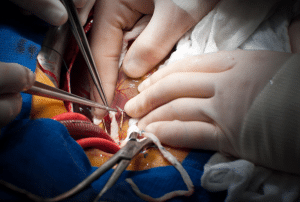
Intestinal and Multivisceral Transplantation
After assessing potential intestinal failure, the physician should consider:
Continued TPN: At the same time, intestinal failure should be excluded, and if this is not Done and there are no potentially lethal complications.
Isolated Intestinal Transplantation: If TPN can be discontinued, it is perhaps the simplest solution of all: with all the strictures on the use of TPN based on the fear of hyperglycemia complications, the concept of just stopping it altogether may strike as rather absurd.
Combined Liver-Small Bowel (LSB) Transplantation: Because if liver function is also affected, it complicates the dog’s condition and becomes dangerous and fatal.
Multivisceral Transplantation: In situations where the damage affects more than one organ.
Isolated Liver Transplantation: It is 90% of the capacity if only the liver is affected.
Patients who can progress to full enteral nutrition should be sent to an intestinal rehabilitation clinic for the fine tuning of TPN, control of this and other complications, and determination of the readiness for surgery or transplantation.
Teduglutide (Gattex) which was approved in adults in 2012 and in pediatric patients in 2019 helps the absorption of nutrients and fluids in the intestine and thus has the potential to decrease the patients’ requirement for transplantation.
Rejection:
- Acute Rejection: Develops few weeks to few months after transplantation and usually responds to changes in immunosuppressive regimen.
- Chronic Rejection: It takes months to years to establish and results in gradual dysfunction of the graft.
Infection:
- Bacterial Infections: Immunosuppressive therapy increases the risk for both opportunistic and conventional bacterial infections in these patients.
- Viral Infections: Include cytomegalovirus (CMV), Epstein-Barr virus (EBV) and herpes simplex virus (HSV).
- Fungal Infections: Potential for patients to gethra invasive fungal infections including Candida and Aspergillus.
Graft Dysfunction:
- Intestinal Graft Dysfunction: Poor result in form of poorly absorbed nutrients, bowel obstruction or graft dysfunction.
- Liver Graft Dysfunction (in combined or multivisceral transplants): May be associated with cholestasis or liver failure.
Biliary Complications:
- Cholestasis: Conditions leading to obstruction of bile flow and may result to liver diseases.
Gastrointestinal Complications:
- Graft-versus-Host Disease (GVHD): It is the condition whereby the recipient’s gastrointestinal tract is attacked by donor immune cells.
- Enteric Fistulas: Inversions and fugitive connections as well as conjoined connections of the intestine with other organs and the skin.
- Bowel Obstruction: As a result of adhesions, strictures or volvulus.
Nutritional Complications:
- Malabsorption: Nevertheless, patients may have even problems with the assimilation of nutrients even after a transplantation.
- Electrolyte Imbalances: Concerning the graft function and nutritive requirements.
Vascular Complications:
- Thrombosis: Any type of blood clots that form in the blood vessels of the graft are potentially hazardous to the graft’s functions.
- Hemorrhage: Bleeding either during the surgery or after the surgery may be experienced.
LEARNING & CME
View All
Advanced
Cardiovascular
Life Support
Basic Life
Support
Pediatric
Advanced Life
Support

Neonatal
Resuscitation
Program

Annual Stroke
Center
Continuing
Education

Opioid and Pain
Management

National
Institutes of
Health Stroke
Scale

Basics of
Electrocardiography