




Medtigo White Logo
AI SearchSearch
Call Us
FAQ Center
Login/Register
HomeNews & OpinionReference
Journals
Education
Services
Slide 1Slide 2Slide 3Slide 4

Inhalational and Balanced Anesthesia

Updated : December 24, 2025


Anesthetic agents administered through inhalation method. One of oldest anesthesia forms, back to early 19th century.

Inhalation anesthetics used to maintain general anesthesia in surgery. For volatile anesthetics use of vaporizers is recommended due to their liquid nature.

Inhalational anesthetics provide amnesia, immobility, and analgesia effect. It is used in medical procedures/surgeries for pain-free operations.

Inhaled and IV anesthetic are FDA-approved agents for purpose of general anesthesia and sedation in the operation room.

The main uses of inhaled anesthetic agents in ICU are for sedation, bronchospasm, and uncontrolled seizures.

Modern Inhalational Anesthetic agents are:

Halothane

Isoflurane

Sevoflurane

Desflurane

Balanced anesthesia is a combination of anesthetic agents and techniques to achieve ideal sedation level. While combining various agents will give synergistic anesthesia effect.

Development in inhalational and balanced anesthesia will improve safety, efficacy, and patient outcomes.

Anesthetic agents administered through inhalation method. One of oldest anesthesia forms, back to early 19th century.

Inhalation anesthetics used to maintain general anesthesia in surgery. For volatile anesthetics use of vaporizers is recommended due to their liquid nature.

Inhalational anesthetics provide amnesia, immobility, and analgesia effect. It is used in medical procedures/surgeries for pain-free operations.

Inhaled and IV anesthetic are FDA-approved agents for purpose of general anesthesia and sedation in the operation room.

The main uses of inhaled anesthetic agents in ICU are for sedation, bronchospasm, and uncontrolled seizures.

Modern Inhalational Anesthetic agents are:

Halothane

Isoflurane

Sevoflurane

Desflurane

Balanced anesthesia is a combination of anesthetic agents and techniques to achieve ideal sedation level. While combining various agents will give synergistic anesthesia effect.

Development in inhalational and balanced anesthesia will improve safety, efficacy, and patient outcomes.

for Inhalational Anesthesia:

General Anesthesia

Pediatric Surgery

Emergency Surgery

Maintenance of Anesthesia

Prolonged Surgeries

Controlled Anesthesia Levels

Patients with Difficult IV Access

Pediatric Patients

for Balanced Anesthesia:

Complex Surgical Procedures

Major Surgeries

High-Risk Patients

Cardiovascular Compromise

Orthopedic Surgeries

Laparoscopic Surgeries

for Inhalational Anesthesia:

Respiratory Issues

Patients with Specific Conditions

Malignant Hyperthermia

Significant Liver Disease

First Trimester (Pregnancy)

for Balanced Anesthesia:

Allergies or Sensitivities

Sensitivity to Muscle Relaxants

Severe Renal Impairment

Severe Cardiovascular Disease

Obesity

Psychiatric Disorders

Sevoflurane and desflurane are the best choices for inhalational anesthetics as they give fast onset and quick recovery in short/long procedures.

It activates anesthetic depth control during surgery with quick adjustments and predictable recovery profile.

It improves pain management with fewer side effects for quick recovery, less discomfort, and faster activity resumption is possible.

for Inhalational Anesthesia:

Anesthesia Machine

Breathing Circuit

Endotracheal Tubes or Laryngeal Mask Airway

for Balanced Anesthesia:

Anesthesia Machine

Neuromuscular monitoring device

Breathing Circuit

Detailed assessment of patient’s medical history, any current medications, and allergies should be conducted.
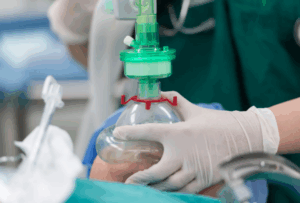
Inhalational anesthesia

Anesthesia mask

For Inhalational Anesthesia:

Step 1: Induction:

Administer with volatile anesthetic agent which is delivered through face anesthesia mask.

Step 2: Maintenance:

Surgeons should adjust the concentration of the inhalational agent to maintain the desired depth of anesthesia.

For Balanced Anesthesia

Step 1: Induction:

Administer with intravenous anesthetic agent to induce rapid onset. It should be followed with muscle relaxants if required.

Step 2: Maintenance:

Surgeons should maintain anesthesia with a combination of inhalational and intravenous agents based on the surgery and patient condition.

Respiratory Complications

Cardiovascular Complications

Malignant Hyperthermia

Neuromuscular complications

Liver Toxicity

Postoperative nausea and vomiting these are commonly noticed adverse effects in inhaled anesthetics.

Malignant hyperthermia is a severe adverse reaction of halothane gas.

Desflurane and isoflurane may irritate the airways of severe asthmatic patients due to pungent odour.

Nitrous oxide should be avoided in craniotomy and intraocular surgeries.

LEARNING & CME

View All

Advanced<br>Cardiovascular<br>Life Support

Advanced
Cardiovascular
Life Support

EXPLORE PLANS
Basic Life<br>Support

Basic Life
Support

EXPLORE PLANS
Pediatric<br>Advanced Life<br>Support

Pediatric
Advanced Life
Support

EXPLORE PLANS
Neonatal<br>Resuscitation<br>Program

Neonatal
Resuscitation
Program

EXPLORE PLANS
Annual Stroke<br>Center<br>Continuing<br>Education

Annual Stroke
Center
Continuing
Education

EXPLORE PLANS
Opioid and Pain<br>Management

Opioid and Pain
Management

FREE COURSE
National<br>Institutes of<br>Health Stroke<br>Scale

National
Institutes of
Health Stroke
Scale

FREE COURSE
Basics of<br>Electrocardiography

Basics of
Electrocardiography

FREE COURSE

Latest Posts