






Cervical cerclage is a pregnancy surgery that prevents miscarriage and early abortion in the pregnant woman whose cervix is weak. This condition is usually termed as cervical insufficiency or incompetent cervix. The cervical area refers to the lower end, closed tight during pregnancy, but somehow forms a barrier that should open to let pass through the baby to be born. However, at times, the cervix starts softening and dilating before its right time. Most of the times, it leads to miscarriage or premature birth.
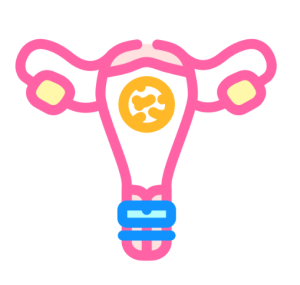
Cervical cerclage surgery
Cervical cerclage is the suturing of the cervix closing, which may help keep it closed to support the baby until the pregnancy reaches a safer point of gestational age, typically the thirty-seventh week. This is usually recommended for women who have had second-trimester pregnancy loss, early contractions, or when a transvaginal ultrasound exam shows cervical length of less than twenty millimeters.
Cervical cerclage is a pregnancy surgery that prevents miscarriage and early abortion in the pregnant woman whose cervix is weak. This condition is usually termed as cervical insufficiency or incompetent cervix. The cervical area refers to the lower end, closed tight during pregnancy, but somehow forms a barrier that should open to let pass through the baby to be born. However, at times, the cervix starts softening and dilating before its right time. Most of the times, it leads to miscarriage or premature birth.
Cervical cerclage surgery
Cervical cerclage is the suturing of the cervix closing, which may help keep it closed to support the baby until the pregnancy reaches a safer point of gestational age, typically the thirty-seventh week. This is usually recommended for women who have had second-trimester pregnancy loss, early contractions, or when a transvaginal ultrasound exam shows cervical length of less than twenty millimeters.
History-Indicated (Prophylactic) Cerclage:
History of previous preterm birth due to cervical incompetence. Second-trimester pregnancy loss is not associated with painful cervical dilation or labor in the prior pregnancy.
History of cervical incompetence documented by previous obstetric history.
Ultrasound-Indicated Cerclage:
A short cervix (< 25 mm) was identified during a second-trimester ultrasound in a patient with a history of preterm birth.
Preterm cervical shortening in an asymptomatic patient with a prior history of preterm birth or miscarriages.
Physical Examination-Indicated (Emergency) Cerclage:
Painless cervical dilation without contractions in the second trimester.
Visible membranes or bulging membranes in the vaginal canal during a physical exam.
Other factors may include:
Twin pregnancies, cervical dilatation in some instances of these pregnancies, and some other cases this indication is controversial. Malformation of the cervix or uterus at birth (e.g., bicornuate uterus, cervical surgery in the past).
Active preterm labor: Where labor has started, it is usually unsafe to suture cerclage because it may precipitate further complications.
Intrauterine infection (chorioamnionitis): Infected uterus is a relative contraindication because cerclage might aggravate the infection or cause complications.
Preterm rupture of membranes (PROM): If the membranes have already presented, cerclage poses a danger of infection or other mishaps.
Fetal anomaly incompatible with life: In cases where the fetus has anomalies that are incompatible with life then cerclage is not advised.
Vaginal bleeding of unknown origin: The contraindications include significant unexplained vaginal bleeding as cerclage might increase the risk of complications.
Speculum
Ring Forceps
Suture Needle
Suture Material
Needle Holder
Scissors
Tenaculum
Dilator (if needed)
Retractors

Pre-procedure examination
Medical History: Check prior pregnancy, interruption of abortions, premature birth, or cervical-uterine surgeries.
Ultrasound: Out of all the ultrasound tests, there is a simple test that may be used to measure cervical length, determine fetal health, and confirm gestational age.
Infection Screening: Pap smear tests for check of bacterial vaginosis, STDs and UTIs.
Procedure Explanation: Explain what cervical cerclage is, the risks of cervical cerclage, the benefits of cervical cerclage and if there are other available options.
Risk Discussion: Treatable conditions that may include infection, premature rupture of membranes, cervical injury and preterm labour.
This is the most common type of the cerclage, which is performed vaginally.
Anesthesia: It can be most often carried out under regional block as spinal epidural or general anesthesia.
Procedure:
Step 1: After washing the external genitalia, the cervix is visualized with the help of a vaginal speculum.
Step 2: A non-absorbable suture like Mersilene or Prolene is threaded around the cervix in a purse-string fashion usually at the level of internal os which is the opening through the uterus.
Step 3: The suture is tightened thus closing the cervix to the required size. The ends of the suture are then tied and any loose thread remaining is trimmed off.
Duration: It may last 20-30 minutes.
The Shirodkar technique is more technically demanding and involves burying the suture deeper into the cervical tissue.
Anesthesia: As like the McDonald cerclage regional or general anesthesia is employed.
Procedure:
Step 1: When the cervix has been accessed the vaginal mucosa around the cervix is then stripped and the bladder may be shifted up to free the cervix further.
Step 2: Thus, the suture is inserted into the tissue in the uterus(stock) at the level of internal os but the suture does not lie more superficially compared to McDonald technique; it is fixed more in the depth of the cervical tissue.
Step 3: The vaginal mucosa is then closed, and the suture layer lies beneath it.
Benefit: It offers a safer option to do it in instances where there has been a failure at a McDonald cerclage previously.
There are cases, which cannot allow for a cerclage to be placed through the vagina (very short cervix, or abnormal anatomy) and thus the transabdominal approach is used.
Anesthesia: This needs to be done under general anesthesia.
Procedure: A mini laparotomy is performed; the entire procedure could also be done via laparoscopy. In the case of a cesarean section, the suture is positioned much higher, approximately at the level of the internal cervical os.
The procedure is even more intrusive than the vaginal approaches, and the cerclage should ideally remain in place for future pregnancies because its removal would require further abdominal surgery.
Post-surgery: If a transabdominal cerclage is used, the woman is normally to have her baby through a scheduled cesarean section.
Infection
Cervical and uterine infection following cerclage may be related to injury of the cervix, uterus, or surrounding tissues. This may be characterized by fever, pain, abnormal vaginal discharge, or any other form of an infection sign.
Cervical Damage:
Use of this procedure may cause damage to the cervical body or any part of it during stitch placement or when the sutures are detached from the cervix. Sometimes, this may lead to some extent of cervical or permanent injury or scar formation of the cervical tissues.
Preterm premature rupture of membranes (PPROM):
The amniotic sac ruptures prematurely leading to preterm labour, infection, or problems with the baby.
Preterm Labor:
Occasionally, cerclage can result in uterine contractions that induce preterm labour depending on the circumstances.
Vaginal Bleeding:
Sometimes, after the procedure, some women can develop vaginal bleeding, this can be because of some trauma that may have occurred during the procedure or due to complications like placenta problems.
Cervical Dystocia:
Sometimes, the cervix does not revert to its closed position after the cerclage suture has been placed; this may make labor and childbirth more difficult.
Cervical or Uterine Lacerations During Removal:
This is because there is always a high risk of injury each time cerclage stitches are removed especially if labor begins before this step or even in the middle of it.
LEARNING & CME
View All
Advanced
Cardiovascular
Life Support
Basic Life
Support

Pediatric
Advanced Life
Support

Neonatal
Resuscitation
Program

Annual Stroke
Center
Continuing
Education

Opioid and Pain
Management

National
Institutes of
Health Stroke
Scale

Basics of
Electrocardiography